
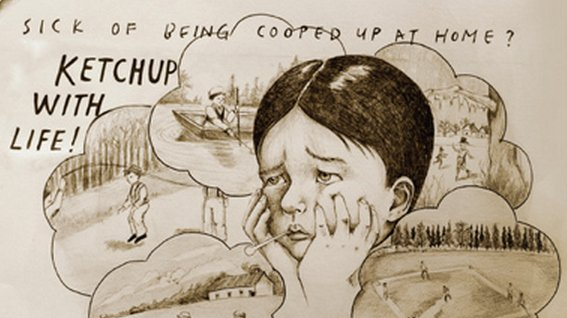
Today, ketchup is a well-loved condiment, especially in the U.S.—a known favorite topping for hamburgers and hot dogs. But did you know that ketchup was once given as a medicine? Or did you know that it originally appeared in China? Ketchup has a surprisingly fascinating history leading up to its notoriety today as America’s beloved flavoring.
Though our modern idea of ketchup is synonymous with tomatoes, these vegetables weren’t even used in ketchup until the 19th century. What we call “ketchup” originally came from China, and it was more of a “fishy sauce” or paste than anything like we use today. And that’s no joke, fish was a real ingredient of the original ketchup.
So when did ketchup appear in the West? That would be around the 1700s—perhaps 1690 at the earliest. It spread along trade routes and, thanks to the British, it eventually showed up in America. As we get into the 19th century, that’s where the history of ketchup starts to become really interesting.
As mentioned previously, tomato ketchup only became a thing in the 19th century, or 1812 to be precise. We can thank American scientist James Mease for that. Perhaps the most fascinating period of ketchup history began in the 1830s, when ketchup started to be marketed and sold as medicine. That’s right, medicine. It was claimed that ketchup could treat or even cure indigestion, diarrhea, jaundice, and rheumatism.
The man primarily responsible for the “ketchup medicine” idea was physician Dr. John Cooke Bennett. He even went on to sell this supposed miracle cure in pill form. Others jumped on the opportunity and began selling their own pills, some of which didn’t even have tomatoes at all and simply included laxatives! As if a time where there existed ketchup pills wasn’t unbelievable enough.
Of course, people soon concluded that ketchup actually wasn’t a very good medicine after all. The period of medicinal ketchup lasted only a few short decades. Around 1876, Mr. Henry Heinz introduced a new arrangement of tomato ketchup which included spices, vinegar, salt, and other ingredients. Though it was called “catsup” back then, today we know it well as Heinz Tomato Ketchup. Their tagline is “It has to be Heinz,” and perhaps it’s not so unfounded a claim considering that today, most can only think of ketchup as just that and nothing remotely resembling what it once was.
So the next time someone looks at you funny for putting ketchup on a particular food, just explain to them the hidden grandiosity and charm of ketchup’s long history. It probably won’t change their opinion, but they’ll at least be too distracted by your sudden history lesson to question your choice of condiments.
— r & c
Further reading:
If you want to learn more of the specific, sometimes-unappetizing details, you can read Uncovering the History of Ketchup as a Medical Remedy: A Look at this Popular Condiment’s Surprising History by Yolanda Salcedo-Sillesa.

 Mysterious History