
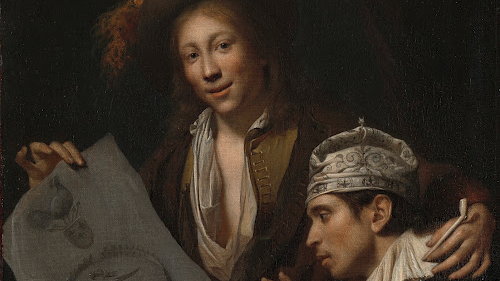
Do you have a least favorite politician? If given the chance, would you see them publicly killed and eaten to get them out of office? The optimist hopes that your answer is “no,” but if you were a Dutch citizen in the 17th century, you might disagree. Let’s talk about the time a Dutch statesman was literally eaten by his people.
First off, we’ll set the scene (or table). Johan de Witt was a prominent Dutch statesman who lived from 1625 to 1672. He was the Grand Pensionary of Holland, which meant he was effectively in control of the Dutch Republic, and his “reign” lasted from around 1653 until his death. This was during a time known as the “First Stadtholderless Period,” where the Dutch Republic lacked an official stadtholder, which can be thought of like a duke or prime minister.

The country found itself divided between two political groups known as the Statists and the Orangists. For the Statists, they favored a loose Federation and non-centralized power. For the Orangists, they wanted a return to the monarchial system that had existed under the House of Orange. Johan and his brother Cornelis de Witt were very influential members of the Statists. Being a political face during this conflict would’ve been worrying enough, yet de Witt’s country had more than its fair share of problems.
When de Witt took office, the Dutch Republic was in a tough spot. Its surrounding neighbors wanted to either carve up the territory or put the young republic under their thumb due to the vast amount of wealth it had, most of which came from the monopolization of trade within Southeast Asia. De Witt had a moderate approach to this situation; his primary interest was to protect the flow of trade and to avoid the possibility of war. He would go on to invest and prioritize the creation of a strong navy to avoid any disruptions to the flow of trade.
De Witt’s investment in the navy was based on the assumption that a land war at that time could be avoided. This proved to be a critical misstep.
The year 1672 would be remembered in Dutch history as the Rampjaar—the “Disaster Year.” King Louis XIV of France decided that the Dutch Republic had been around for just a bit too long so he decided to declare war and invade their territory. The French had the English on their side, the latter no doubt being motivated by their humiliations on behalf of the Dutch during the Second Anglo-Dutch War not even a decade prior. Beset by multiple land threats and facing an English blockade, the Dutch and de Witt were in a great deal of trouble.
Remember the Orangists? As it turns out, de Witt’s main threat would come from within, so to speak. While the French were storming through Dutch territory, the Orangists were of course calling for de Witt’s head. On June 21st of that year, they would even go on to make a failed assassination attempt against him.
In a bid to escape the malicious attention, de Witt would choose to resign his position as Grand Pensionary of Holland. This, however, could not satisfy the opposition’s thirst for blood. His brother Cornelis was captured and tortured by the Orangists. Johan would go to visit his brother but upon hearing word that both de Witts were in the same place, a mob would gather outside. This mob would burst in and kill both Johan and Cornelius by tearing them to pieces.
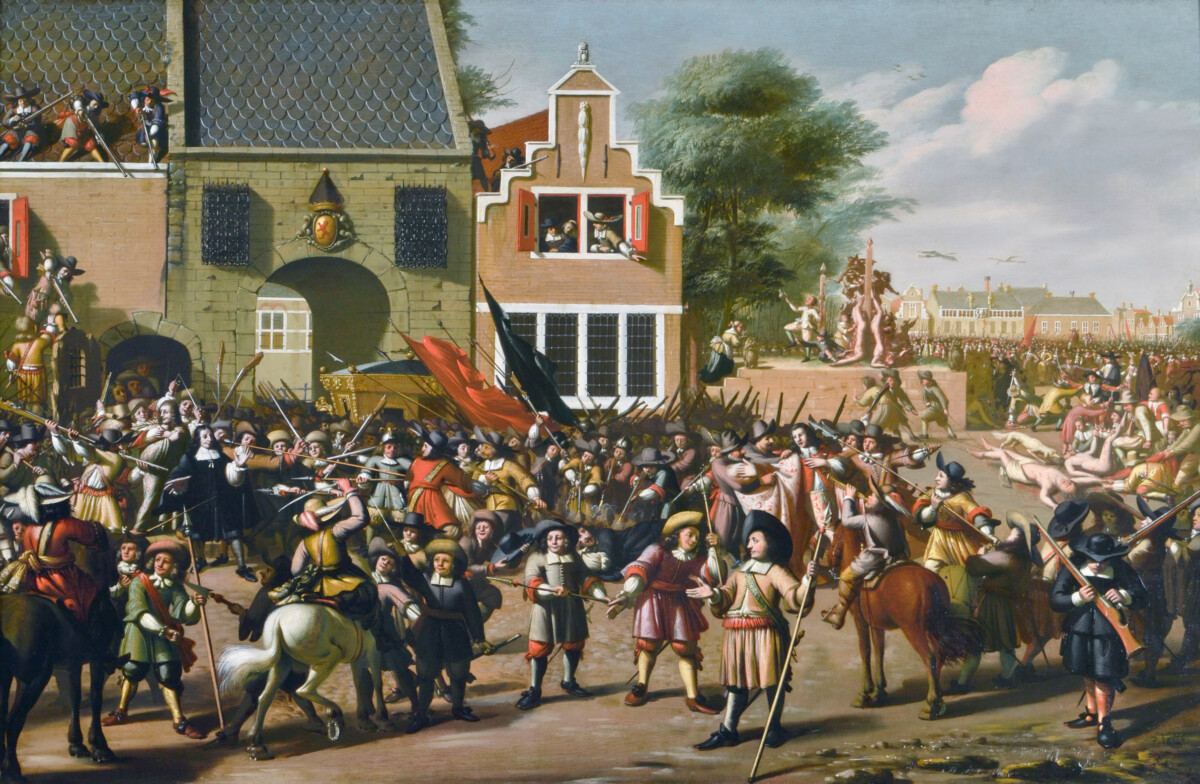
The brothers de Witt were shot before they fell victim to the frenzy of the mob. It is said that their mutilated bodies were strung up on display, while the mob feasted on parts of their remains in a surely horrific display of public cannibalism.
We now arrive at the long-awaited question: why in the world did the mob choose to cannibalize Johan and Cornelis? Though we can never know for sure, the modern consensus suggests that instead of it being a bloodthirsty frenzy, the whole display was actually organized, perhaps by the Orangist leaders. It may have been an attempt to inspire fear and public order during a time that was quite precarious for the Dutch. After all, in the age of public executions and torture, state-sanctioned cannibalism must’ve seemed at least slightly more reasonable then than it does today. It’s also worth mentioning that no one was legally convicted for this event, which further suggests that political motivations were behind it all.
The bottom line is: if you’re ever visiting the Netherlands, probably don’t ask them which member of their legislature they’d eat if they had to.
— r & c
Further reading:
Encyclopædia Britannica has an article on Johan de Witt in case you’d like to learn more about his life serving the people prior to being served to the people.
Check out “That time the Dutch ate their prime minister” by DutchReview if you’d like to hear about this story straight from the Dutch themselves (cooking tips not included).

 Mysterious History